
THE GUIDE | The NZ Bungalow: A Short History, and What Yours Could Become
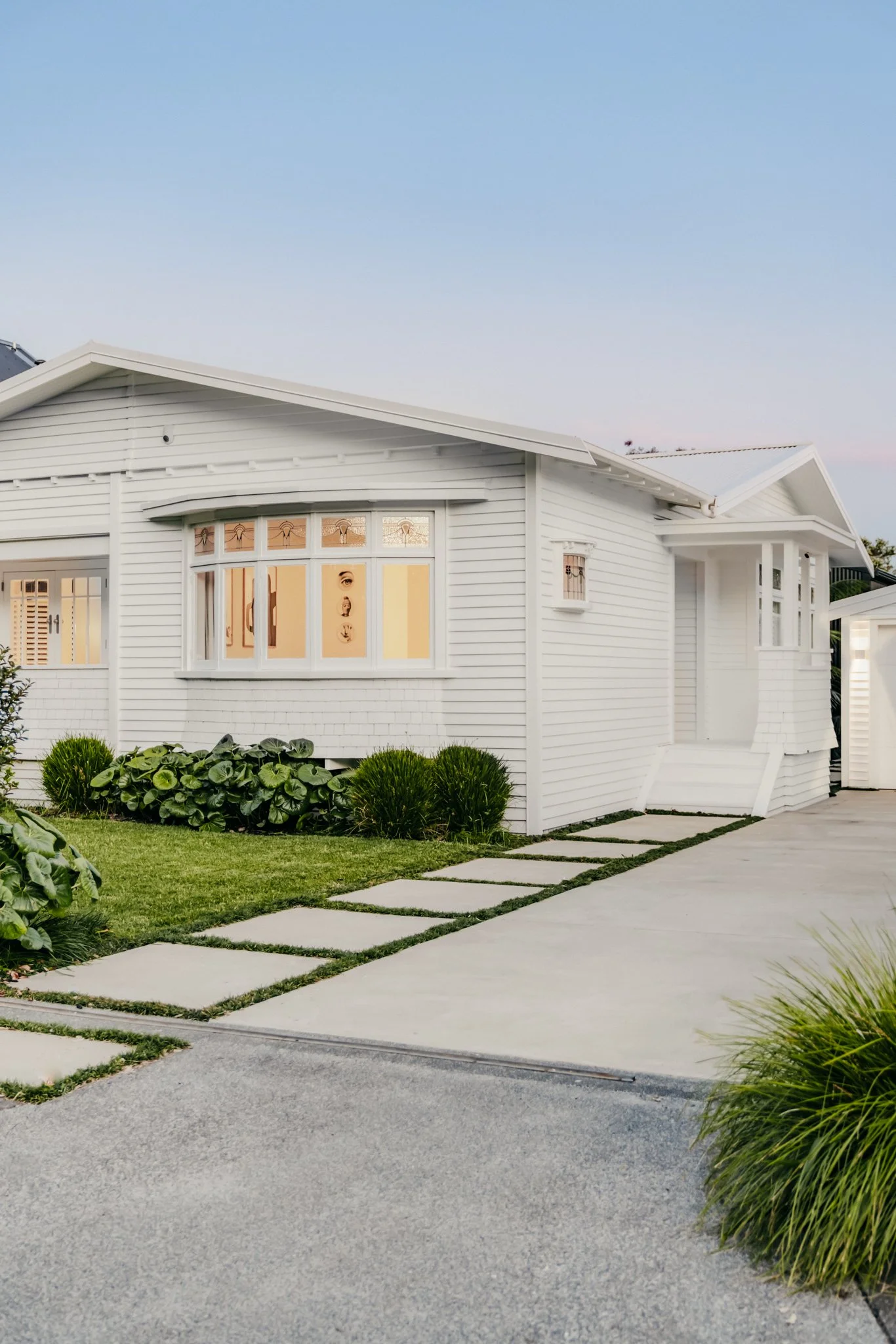
So you want to renovate your bungalow?
Your bungalow was designed for a 1920s family, and we no longer live like 1920s families. But before you decide what to change, it helps to understand what you have.
Walk down almost any street in Grey Lynn, Westmere, Point Chevalier or Sandringham and you'll see them: low-slung rooflines, deep eaves, generous porches, and timber joinery that has quietly outlasted a century of weather. The New Zealand bungalow is one of our most beloved housing types and, for us at Macfie Architecture, one of the most rewarding to renovate.
With so many bungalows passing through our studio lately, we thought it was time to tell their story: where they came from, what makes them special, and why thoughtful renovation brings out the best in them.
Where the New Zealand bungalow came from?
From around 1910, the ornate Victorian and Edwardian villa began to give way to something simpler and more relaxed. The influence came largely from California, where the Arts and Crafts movement had produced a new kind of house: single-storey, honest in its materials, and designed around informal family living rather than formal entertaining.
The style arrived in New Zealand through pattern books, imported kitset homes, and local architects and builders who adapted it enthusiastically to our conditions. After the First World War, the bungalow became the dominant house type across the country, and it held that position well into the 1930s.
The transition wasn't instant. For a decade or so, builders produced "transitional villas", which were villa floor plans dressed in bungalow clothing, with lower-pitched roofs and exposed rafters replacing the villa's boxed eaves and fretwork. By the mid-1920s, though, the bungalow had fully arrived, and whole Auckland suburbs were built in the style. Sandringham is perhaps the best example: a suburb that grew up almost entirely in the bungalow era, its streets still lined with them a century later.
What makes a bungalow a bungalow?
A few signatures give the New Zealand bungalow its unmistakable character.
The low-pitched gable roof with wide, sheltering eaves and exposed rafter ends, a deliberate contrast to the villa's steep hips and hidden gutters. Casement windows, often arranged in banks with leadlight top-lights, replacing the villa's double-hung sashes. Box bay windows with shingled or panelled aprons. Generous porches framed by squat, tapered columns or solid balustrades. And inside, native timber everywhere: rimu panelling, plate rails, box-beam ceilings and built-in furniture, all executed with a level of craftsmanship that is genuinely difficult to reproduce today.
Where the villa was built to impress the street, the bungalow was built for the family living in it. That shift towards comfort, sunlight and informality is exactly why these homes still resonate with the way New Zealanders want to live a century later.
Why we love renovating them
The bones are exceptional
Bungalows were typically built from heart native timber on generous suburban sections. The quality of the original materials, and the workmanship in the joinery, ceilings and fireplaces, gives us a foundation that most new construction simply can't match. Our job is to honour that craft while resolving the things the 1920s got wrong.
They have room to grow
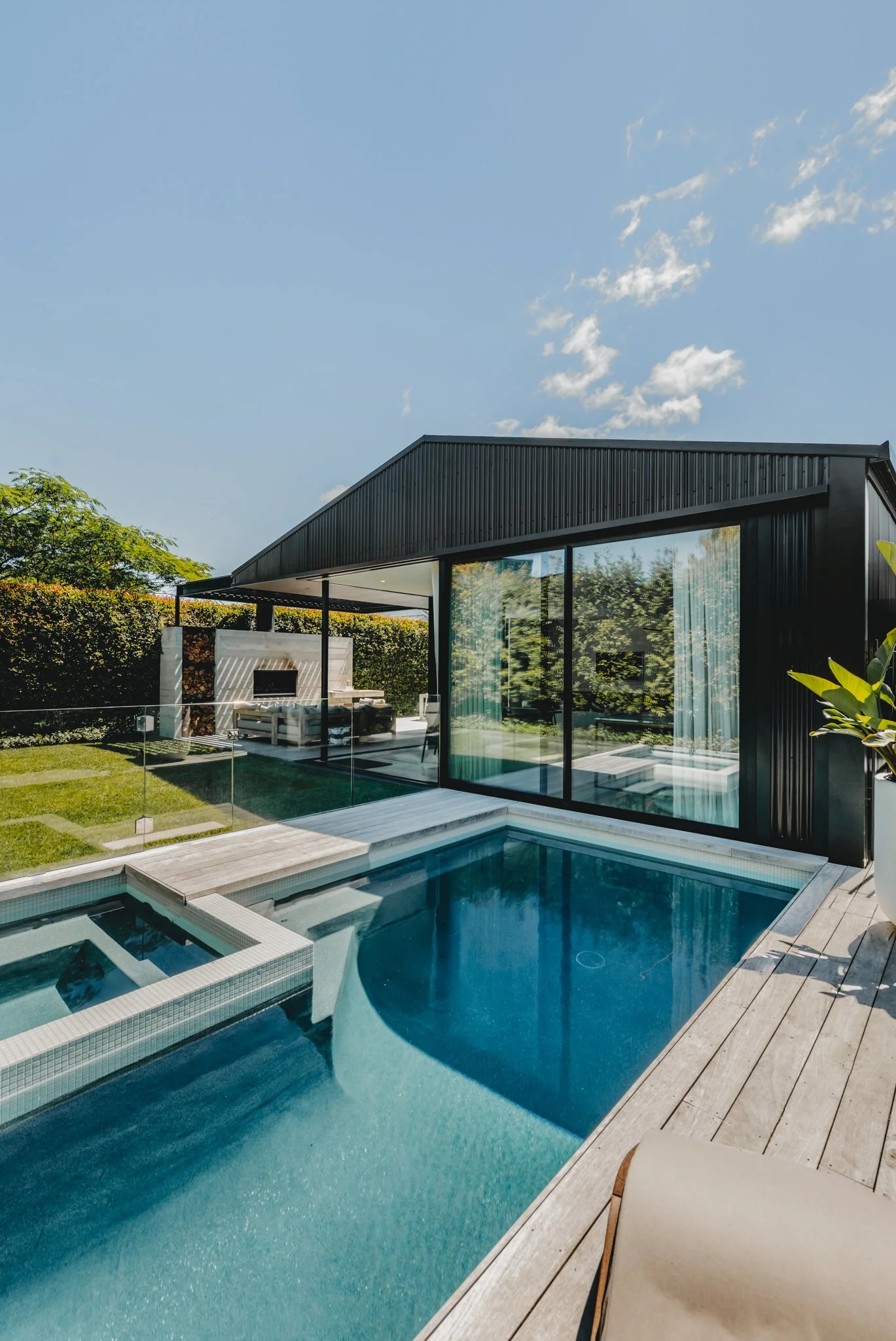
Because most bungalows sit on their sections with the living rooms facing the street, the rear of the house is usually where the opportunity lies. A well-designed rear extension can transform how the home functions, opening the kitchen and living spaces to the garden and the sun, while the character street frontage remains untouched. It's the best of both worlds: heritage from the footpath, contemporary living from the backyard.
The move that does the most work here is the step-down addition. A bungalow sits high off the ground and the garden sits low, so fighting that level change is expensive and rarely convincing. Stepping down into it instead gives you ceiling height, light from above, and a room that feels considerably larger than its floor area, connected to the garden in a way the original house never was.
The problems are solvable, with design.
The bungalow's shortcomings are well known. Floor plans that ignored solar orientation, so living rooms often face south. Small, closed-off kitchens and bathrooms tucked into the back of the house. No insulation, and dark central hallways. These aren't reasons to start again. They're design problems, and design problems are what we do. Reorienting living spaces towards the sun, borrowing light through carefully placed openings, and integrating modern insulation, heating and glazing without erasing original detail: this is the craft of character renovation.
What a modern family usually asks for is consistent: indoor outdoor flow, natural light, an open plan kitchen, living and dining, a second lounge, and storage, which no bungalow was ever built with. None of that is at odds with the original house. It simply asks for a plan that suits the way people live now.
Every one is different.
No two bungalows have aged the same way. Some retain every leadlight and plate rail; others were "modernised" in the 1970s and are waiting to have their character recovered. Part of the pleasure of this work is reading each house, understanding what's original, what's worth restoring, and where a confident contemporary intervention will serve the home best.
Renovating with respect.
Our approach to bungalow renovation starts with what's there. We document the original fabric, identify the features that carry the home's character (joinery, ceilings, fireplaces, porch details) and design around them. Where we extend, we aim for additions that are clearly of their own time but sympathetic in scale, proportion and materials. A great bungalow renovation shouldn't leave you guessing where old ends and new begins in a jarring way; it should feel like the house has simply grown into its next century.
It's worth noting that some bungalows sit within special character areas under the Auckland Unitary Plan, which can affect what changes are possible, particularly to the street-facing elevations. This is another reason early design advice pays for itself: knowing the planning context before you fall in love with a scheme.
Want to know what is possible with your bungalow?
As an award-winning family practice specialising in character renovation, we've spent years learning the language of these homes. If you own a bungalow, whether it's largely original or long overdue some love, we'd be delighted to talk about what it could become.
We offer a complimentary consultation for prospective clients. Heritage is what we know best.
Get in touch to start the conversation, or explore our projects to see our character renovation work.